How to correct a WSL VM so that it can use a VPN

This is a really weird edge case that I came across at work. After an update to Windows subsystem for Linux (WSL) I was no longer able to use my Cisco AnyConnect VPN connection to connect to any of the infrastructure I manage.

WSL (112) ERROR: CreateProcessParseCommon:782: Failed to translate

Currently, the only method that I have to use a WSL Virtual Machine (VM) is to use this great third party script so that my VM knows how to actually use a network. I do with Microsoft had an easier way to do this, WSL has no network connectivity once connected to a VPN. 🤦🏻‍♂️

At any rate, all of these weird tech issues aside with how I choose to SSH into the systems I manage at work, this is how you correct the error WSL (112) ERROR: CreateProcessParseCommon:782: Failed to translate when attempting to use a WSL VM on a VPN Connection. You will need to edit the .profile folder in your home directory (/home/your_userneame_here) and add the following line to the end of the file.

wsl.exe -d wsl-vpnkit --cd /app service wsl-vpnkit start

To apply the fix, power cycle your WSL VM with your method of choice. I hope this helps and same you time having to search all over the Internet or watch a Youtube “tutorial” what wastes your time. If you have any questions, etc. hit me up via one of the methods on my contact page. Thanks for stopping by! 🙂
Views: 14

Similar Posts

  • Enabling Apple Intelligence on macOS 15.1 (Sequoia) Developer Beta

    I have spent the last week or so being very confused on how to enable the macOS 15.1 Beta onto my M2 MacBook Air. I finally stumbled across the method and it made sense once I found it but it was not very intuitive. There are now two separate macOS 15 beta channels and you will need to open System Settings and navigate to General > Software update > Beta Updates. You will need to choose macOS Sequoia 15.1 Developer beta by clicking on the i symbol to the right.

    Dialog box for Beta Updates on macOS, showing a dropdown menu with options: “Off,” “macOS Sequoia 15.1 Developer Beta” (selected), “macOS Sequoia Public Beta,” and “macOS Sequoia Developer Beta.” Below, an Apple Account is listed with the email “gatewayy@gatewayy.net.” There is a “Done” button.

    Once you have selected the new beta channel you Mac should download the update and install it. Once you have installed the update and logged back in you will not immediately have the limited set of Apple Intelligence features. Apple has made them opt-in in order to not bog down their new Private Cloud Compute infrastructure that they are building out. To join the waitlist you will need to open System Settings once again and navigate to the Siri section there is a new Apple Intelligence & Siri section. You will need to select the Join Apple Intelligence Waitlist… button to proceed.

    Siri settings page featuring “Apple Intelligence & Siri” with a beta label, described as a personal intelligence system integrated into Mac, apps, and Siri. A “Join Apple Intelligence Waitlist…” button is present, with a note below about reserving a spot to experience personalized intelligence.

    Get past the marketing dialog.

    Apple Intelligence setup screen with a beta label. Features listed include “New Ways to Express Yourself,” “The Start of a New Era for Siri,” and “Built for Privacy.” There are “Not Now” and “Continue” buttons at the bottom. A link for “About Apple Intelligence & Privacy…” is also present.

    You are now on the waitlist and you should see a preparing dialog.

    Siri settings page showing “Apple Intelligence & Siri” with a beta label. Description states it is a personal intelligence system integrated into Mac, apps, and Siri. “Apple Intelligence” status is “Preparing.” A note below indicates users will be notified when it becomes available for their Mac.

    It took around fifteen minutes for this to happen and you should see the dialog change to enable Apple Intelligence and you should see a notification informing you that the feature is ready to be enabled. I am assuming that somewhere behind the scenes something regarding Apple’s Private Cloud Compute is being created for your device.

    Now, you will see a few short dialogs giving you a brief overview of the current Apple Intelligence features.

    You are now up and running with Apple Intelligence. It is very much early days and only a very small set of features are available with more to come in the next few months.

    Views: 2
  • How to Find Out What Version of Linux You Are Running

    ---------- On Red Hat Linux ---------- 
    $ cat /etc/redhat-release
    
    ---------- On CentOS Linux ---------- 
    $ cat /etc/centos-release
    
    ---------- On Fedora Linux ---------- 
    $ cat /etc/fedora-release
    
    ---------- On Debian Linux ---------- 
    $ cat /etc/debian_version
    
    ---------- On Ubuntu and Linux Mint ---------- 
    $ cat /etc/lsb-release
    
    ---------- On Gentoo Linux ---------- 
    $ cat /etc/gentoo-release
    
    ---------- On SuSE Linux ---------- 
    $ cat /etc/SuSE-release

    AS you can see this various depending on on which form of the original Linux Operating System so I usually end up searching for this as it is not something that I use day to day in my professional or work life. I hope it makes somees’s day that much easier. 🙂

    Views: 6
  • Cloudflare blocking rest API calls from WordPress’ Gutenberg editor.

    Recently WordPress has updated their WYSIWYG editor to Gutenberg which is absolutely fantastic!  The only issue thus far is that when editing or updating a post within WordPress you see is the following.

    This prevents the auto save and publish functions from working.  WordPress and Cloudflare are working on the issue and have a workaround in place.   The fix involves disabling two rules in the WordPress rules set in the Web Application Firewall settings in your Cloudflare account.

    1. Once you are logged in click on the domain that you need to edit.
    2. Click on Firewall from the top menu.
    3. Scroll down to the section titled IP Firewall Button.
      1. Click the button to the left titled Web Application Firewall.
    4. Look for the section titled Package: Cloudflare Rule Set.
      1. Click Rule Details.
    5. Scroll down to the section titled Cloudflare WordPress and click the link.
    6. Click on page 4 from the pagination at the bottom of the section.
    7. Look for the rules WP0025A and WP0025A.
    8. On the far right side of the section under the Mode heading you will see a drop down list.
    9. Choose disable for both rules.
    10. You should see a green par across the bottom of the screen indicating that the settings are saved.
    11. Click the Close button.
    12. Go back to your WordPress Admin area and try to edit a post.

    Unfortunately this workaround has never worked for me even after Gutenberg was updated and Cloudflare pushed out patches on their end.  As a last resort I had to whitelist my IP from the Firewall Events section of the Firewall page.

    Now I am once again able to edit posts and whatnot in WordPress!

    Views: 12
  • A nice Windows Task Manager tip I stumbled across this weekend

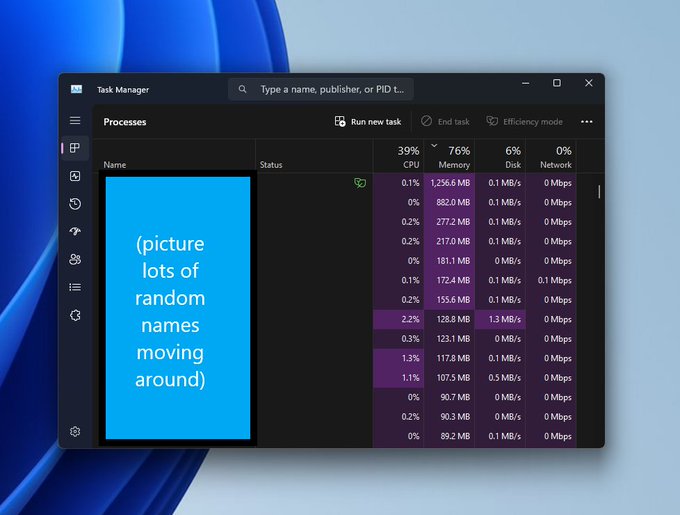
    A screenshot of the Windows 10/11 Task manager application.

    I stumbled across this interesting article this week from The Verge from my beloved NetNewsWire feeds. The article is titled Today I learned you can easily pause the Windows Task Manager to stop apps moving around. The gist of the article is the below quote for those in a hurry. 😝

    I can’t believe I’ve been struggling with apps in the Task Manager randomly moving around without realizing there’s a simple keyboard shortcut to pause the Task Manager and stop its contents in their tracks. Yup, all you have to do is hold down the CTRL key and it will pause the Task Manager on both Windows 10 and Windows 11, and perhaps even older versions of Windows, too.

    Tom Warren via The Verge

    This tip only applies to Windows 10 and 11 and I wish I had known this years ago! At any rate as you can see in the original article at your leisure and I hope it helps out others out there in this wide world.

    Views: 8
  • How to clone permission of a directory of file onto another file or directory in Linux

    In my day job I recently came across a much easier was to deal with file and/or directory permissions on Linux based systems. Typically, to determine the permissions of a file or directory you would use the ls command with various potions appended to the end of the command and to change the same file or directory’s permissions you would use the chmod command. As I recently discovered the chmod is also able to clone or copy permissions as well as manually set them.

    To lustrate what I ma talking about let’s create a hypothetically example where we have two files with the following permissions.

    $ ls -l file*
    -rwxr-xr--. 1 lrendek lrendek 0 Apr  7 14:39 file1
    -rw-rw-r--. 1 lrendek lrendek 0 Apr  7 14:40 file2
    

    If we wanted to copy the permissions from file 1 onto file2 we would run the following option appended to the chmod command.

    $ chmod --reference=file1 file2
    

    As we can see the permissions for file2 have been cloned from file1.

    $ ls -l file*
    -rwxr-xr--. 1 lrendek lrendek 0 Apr  7 14:39 file1
    -rwxr-xr--. 1 lrendek lrendek 0 Apr  7 14:40 file2
    

    If we extend this example further we can also clone the permissions of a directory as well!

    $ ls -ld dir*
    d--x--x--x. 2 lrendek lrendek 40 Apr  7 14:52 dir1
    drwxrwxr-x. 2 lrendek lrendek 40 Apr  7 14:52 dir2
    $ chmod --reference=dir1 dir2
    $ ls -ld dir*
    d--x--x--x. 2 lrendek lrendek 40 Apr  7 14:52 dir1
    d--x--x--x. 2 lrendek lrendek 40 Apr  7 14:52 dir2
    

    I had a little bit of an issue finding this but stubbled across this site that provided me with the syntax and examples. Although, I am making this entry mainly for myself but I also hoping that this post will make another Sys. Admin. Job easier. Uf you have any questions, comments, etc. please feel free to contact me on my Contact page or on Twitter.

    Views: 5
  • Determine MacOS version from Terminal (CLI)

    As you may or may not know the way most people determine what version of MAcOS they are running is by clicking on the Apple Menu in the upper left hand corner of the screen and selecting About this Mac. You will see a popup dialog that looks something like this.

    Apple Photos Document
    I am using MacOS’ Dark Mode so you might not see this exact window.

    If you would like a geekier and possibly faster way to determine this you can launch Terminal by either using Spotlight Search (Click the magnifying class (🔍) in your Mac’s Menu Bar or use the hand keyboard shortcut of ⌘(Command)+Space. Once the appliation finsihes launching you will see a window that looks something like this:

    Screenshot 2024 06 12 At 12.41.33 pm
    I have gone a little nuts with customizing my terminal experience so your will most likely look totally different. 🙂

    There are two commands you can now run that will display your MacOS version:

    #Simple Output:
    gatewayy@Swordfish-II ~ sw_vers -productVersion
    15.0
    
    #More detailed Output:
    gatewayy@Swordfish-II ~ system_profiler SPSoftwareDataType
    Software:
    
        System Software Overview:
    
          System Version: macOS 15.0 (24A5264n)
          Kernel Version: Darwin 24.0.0
          Boot Volume: Macintosh HD
          Boot Mode: Normal
          Computer Name: Swordfish II
          User Name: Brett Elliff (gatewayy)
          Secure Virtual Memory: Enabled
          System Integrity Protection: Enabled
          Time since boot: 1 day, 17 hours, 29 minutes

    I keep having to search for this, so I thought I might as well put this down so others can benefit from the knowledge. If you have any questions, thoughts, etc. you can reach me via my Contact page or feel free to DM me on Mastodon.

    Via: SuperUser

    Views: 29
